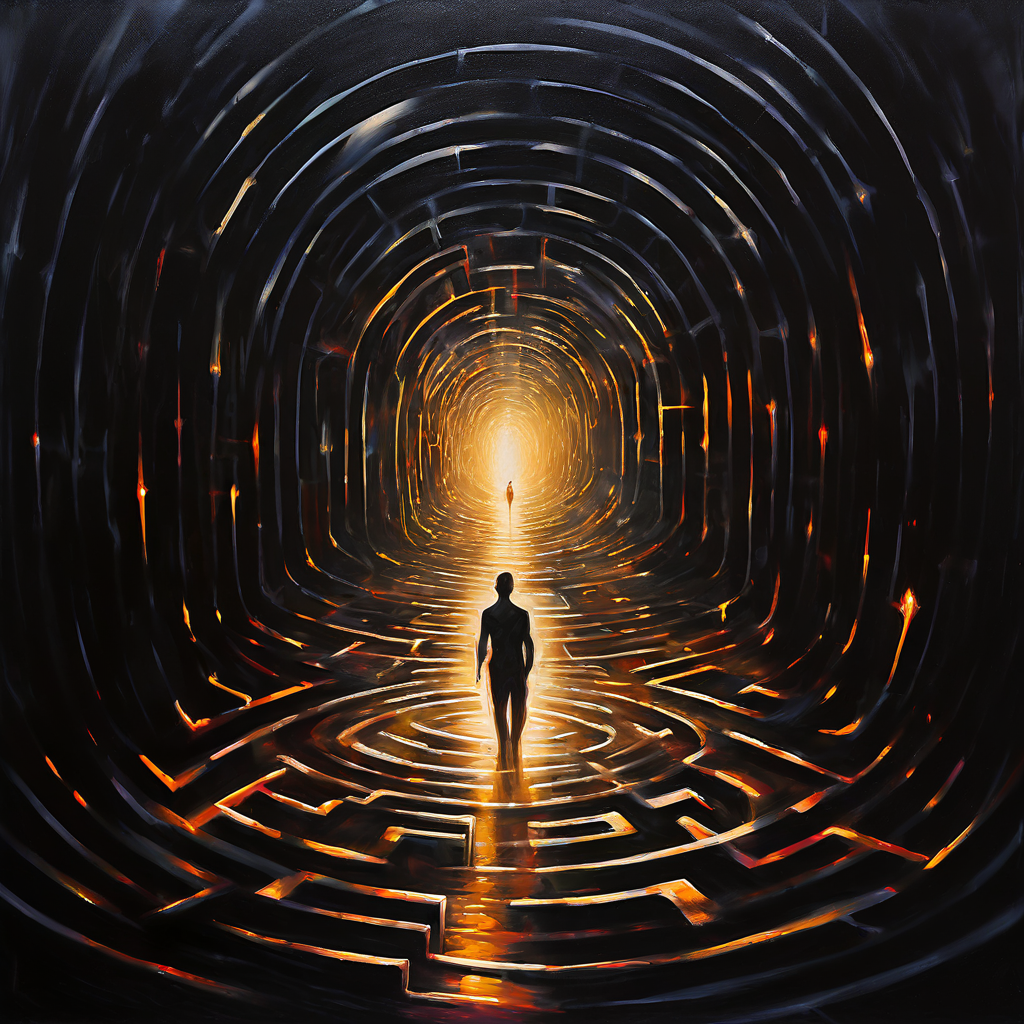
 “The Hero Path We have not even to risk the adventure alone for the heroes of all time have gone before us. The labyrinth is thoroughly known ... we have only to follow the thread of the hero path. And where we had thought to find an abomination we shall find a God. And where we had thought to slay another we shall slay ourselves. Where we had thought to travel outwards we shall come to the center of our own existence. And where we had thought to be alone we shall be with all the world.” ― Joseph Campbell The words of Joseph Campbell always had a way of stirring something deep within me. Like a call to the parts of the soul that we keep hidden, even from ourselves. I came across his quote on the hero path again recently. It's a strange thing to think about, isn't it? The hero's journey. It sounds grand, like something out of an epic. But really, it's about the quiet battles we fight every day. The ones no one sees.
The Labyrinth Within Campbell talks about the labyrinth. Not a maze of stone and ivy you might find in some ancient castle grounds, but the labyrinth of our existence. It's a maze alright, but one that's built of choices, chances, and challenges. And yes, it's thoroughly known, charted by the heroes of all time who've walked it before us. But knowing that doesn't make the walking any less daunting, does it? The Lonely Path Here's the thing about the hero's path—it's lonely. Not because you're necessarily physically alone. You could be surrounded by people, by family, friends, lovers. But the path... the path you have to walk by yourself. Because the joys and tribulations, the anguish, and the tears, they're yours and yours alone. They're the weights and wings of your soul, invisible and intangible to anyone but you. Switch the scenario into something simpler, like the gym. Everyone's there, doing their thing. You see someone, a figure of what you aspire to be, and you push yourself harder. But at the end of the day, your path to reaching or not reaching that aspiration, it's yours alone. It's not about competition; it's about personal journey, personal growth. The muscular hunk, he's on his path too. And it's just as lonely. Heroes in Our Making Understanding that our path is a solitary one doesn't have to be a source of despair. On the contrary, it can be freeing. Knowing that you're the hero of your own story, that the trials and tribulations are yours to face, it's empowering. It means you're not a passive player in the game of life. You're active, you're engaged, you're responsible. And yes, that's a heavy load, but it's also an incredible opportunity. Holding Our Destiny When we accept that our path is our own, that we walk it alone even in the company of others, we stop looking for someone to blame. We stop waiting for someone to save us. We grab the reins of our destiny with our own hands, and we steer. That's not to say we don't need help along the way, don't get me wrong. Heroes have allies, after all. But at the end of the day, the path is walked by our feet, the battles fought by our hands, the choices made by our heart. So, here's to the heroes. Here's to the lonely paths. Here's to the understanding that in the vast labyrinth of life, we're both the minotaur and the hero. The monster we fear and the savior we seek are both us. And the path to the center, to the heart of our existence, it's one we must walk alone. But in doing so, we find not abomination, but divinity. Not solitude, but a connection with all the world.
0 Comments
Last night, late night, lying in bed, I found myself in the glow of the TV screen. Watching that British Netflix series, "Bad Education." Maybe you've seen it. A group of misfits, teachers more flawed than their students. Comedy, sure, but there's something underneath. A layer of grit, of realness. And there it was—like a ghost you don't quite see but feel—a thought snuck up on me. How the hell does our childhood shape us so much? I mean, these kids in the show, they're screwing up, fighting their way through adolescence. But it's more than just teenage angst. You can almost see the clay being molded, can see these young faces turning into the adults they'll become. With all their quirks, flaws, fears. The whole mess. The Subconscious LabyrinthWhat's striking is how this happens on the down-low, in the dark alleys of your mind. You don't get a memo saying, "Hey, that thing that happened when you were 7? It's why you can't hold a relationship now." Nope. It's more subtle. Like an echo you can't place, but you know you've heard before. You know, I used to think that we're blank slates. Tabula rasa, they call it. A page waiting to be written on. But it's not like that, is it? It’s as if the ink bleeds through from previous pages—pages you didn't even know you had. Sometimes I think about my own pages. My mom, never present since the divorce while I was just one. Dad, with his temper. What imprints have they left? And more importantly, are those imprints forever? Are they scars or just... smudges?  Forgotten but Not GoneFor the life of me, I can't remember my 8th birthday. I've seen photos, though. There I am, a slice of cake in front of me, candles flickering. I'm smiling, but it's a tight smile. Forced. What was happening in that moment? What was going through my young mind? Forgotten, yes, but is it gone? Doubt it. You see, even the stuff we've forgotten, it's like sediment at the bottom of a river. You don't see it, but it shapes the course of the water. It's why sometimes you feel a sudden anger, an irrational fear, a strange compulsion. You're not just you; you're a collection of everything that’s happened to you. And some of that stuff, it's still happening, even if you've "moved on." A Way Out?What I'm trying to get at is, can we get out of it? Is there a way to not just be a product of your past? I wish I had a neat answer, tied up with a bow. But I don't. All I've got are questions.
Maybe, just maybe, the first step is acknowledging it. The scars, the sediment. And understanding that it's not just about looking back but also peering ahead. The road forward is shaped by what’s behind, sure, but you're still the one driving. And maybe, if you know your own shape—a shape you didn’t entirely choose—you can start to reshape it. Start to choose. Until then, another episode is queued up. More misfits navigating through life. And as I watch, I wonder about their futures, about my future. And I keep asking myself, "What makes me me?" Yeah, what makes any of us, us?  It's a Saturday night. My friends are at a bar, clinking glasses, laughing. That kind of laughter that fills up the room. Photos are being posted. Selfies. They're living the moment, and they want the world to know. But me? I'm at home, and I can't tell you how good that feels. I'm not missing out. I'm just... missing out. But it's a different kind. It's not the Fear of Missing Out, it's the Joy of Missing Out, or JOMO. Why Embrace JOMO? You're gonna think I'm some kind of hermit, but hear me out. We live in a world that glorifies the hustle, the crowd, the noise. People running around like ants on sugar, each busier than the next. You feel like you gotta keep up, or you'll get lost in the shuffle. But let me tell you something, there's a sweetness in stepping back, slowing down. Something wholesome about saying, "Not today." For years, I was running in that rat race. An unending cycle of obligations, social events, work. But was it fulfilling? Hell, no. What are we racing towards anyway? The grave? Seems to me like we need to slow down a bit. Let life marinate. Let yourself feel things, live deliberately. Steps to JOMO It's easier said than done, I get that. But let me give you some pointers, and maybe you can find your own pace, your own rhythm.
1. Set Boundaries: The first step in enjoying your own time is to protect it. It's okay to say no, you know? You don't have to be everywhere. You don't have to do everything. And you certainly don't owe anyone an explanation for wanting some time for yourself. 2. Be Mindful: When you're not racing around, you've got time to think, to be aware. You notice the birds in your yard, the smell of your morning coffee, the curve of your lover's smile. This is life. The small things are the big things. 3. Disconnect: Those devices, they're always calling out to you, aren't they? Notifications, messages, news. It’s like a carnival barker outside your window. But when you're offline, you're really alive. Silence that phone. Better yet, turn it off. Live in your own reality, not the curated one you see through a screen. 4. Reflect and Plan: I don't mean setting up Excel sheets of your life. Just take some time to think about where you're going, what you want. Sometimes you'll find that the things you thought were essential, you don't need at all. 5. Do What You Love: It’s not about doing nothing. It’s about doing what you want to do, without the pressure of having to showcase it. Read that book, go for that hike, cook that recipe you’ve been wanting to try. Do it for yourself, not for the 'Gram. Don't get me wrong, I still go out. I still meet people. It's good to be part of the world. But I've learned to also appreciate the quiet, the stillness. There's a richness there that's often overlooked. So next time you find yourself being sucked into the swirl of social obligations and the endless march of notifications, consider stepping back. Find your joy in missing out. After all, you’re not really missing out, you’re just finding a different kind of fullness. A fullness that’s been there all along, just waiting for you to notice.  Today's thoughts started somewhere unexpected. A random online conversation with a friend, nothing more than a fleeting exchange of words and ideas, but sometimes, that's all it takes. A spark, a comment, and suddenly, the mind starts to wander. My friend was talking about feeling drained or tired lately, something we've all felt at some point. But his weariness had a particular sting. He's been accompanying his father for chemotherapy treatments, sharing the burden with his mom. In that hospital, surrounded by old folks, he found it hard to generate energy. I found myself nodding, understanding his words. It's good to surround oneself with likeminded people, he said. There was truth in that. We feed off each other's energies, thrive on shared passions and dreams. But what happens when the well runs dry? What do you do when you're the one who has to be the source of energy, the wellspring? I thought about my friend's predicament, the difficult road he's walking. But then something else occurred to me. There's something powerful in being the giver, in being the one to emanate energy from within. It's not always about receiving, about drawing from others. Sometimes, it's about finding a higher calling, a deeper meaning. For my friend, it could be his duty as a son, his love for his father. In these tough times, he's finding the strength to provide care, to be there. It's a noble act, an act that requires him to dig deep, to find something more within himself. When the energy level is low, sometimes we need to step back, take a deep breath, and ask ourselves, "Why am I doing what I am doing now?" That simple question, that moment of introspection, can reveal so much.  More often than not, we may realize that what's making us tired or what seems like a chore may not be a chore after all. In that understanding, in that clarity, we might find joy in the act. We may discover that the very thing that's wearing us down is also lifting us up because we find a greater meaning in it.
I ended the conversation with my friend with a newfound respect for his journey, for his strength. I saw him not just as someone seeking energy but as someone giving, sharing, loving. In the end, we're all searching for meaning, for a reason to keep going. And sometimes, it's not about looking outward but inward, finding that energy source within us, tapping into something profound and beautiful. The next time you find yourself weary, the next time the weight of life feels too heavy, pause for a moment, ask yourself why, and listen to what your heart has to say. You might be surprised at what you find. Sometimes, the answers we seek are right there, hidden in plain sight, waiting to be discovered. All we have to do is look.  I’m full on energy to start the week ahead.
I woke up at 6am on Monday. The sun was shining through the window and I felt a surge of vitality in my veins. I had a good sleep, a good dream, a good feeling. I was ready to face the day and the week ahead. I had many ideas in my head, buzzing like bees. Ideas for work, for life, for fun. I felt passionate about what I was going to do, what I was going to create, what I was going to achieve. I had a vision, a purpose, a drive. I looked at my to-do list and it was long. But it didn’t scare me or overwhelm me. It motivated me and challenged me. It was all self-driven, all things that I wanted to do, not things that I had to do. I was excited by it, actually. I felt like I had control over my own destiny. I got up and got ready. I had a quick breakfast, a cup of cold chinese tea, a shower. I put on some music, some upbeat tunes that matched my mood. I checked my email, my messages, my social media. I felt alive and happy. I felt like nothing could stop me. I’m full on energy to start the week ahead. And you know what? It feels good. 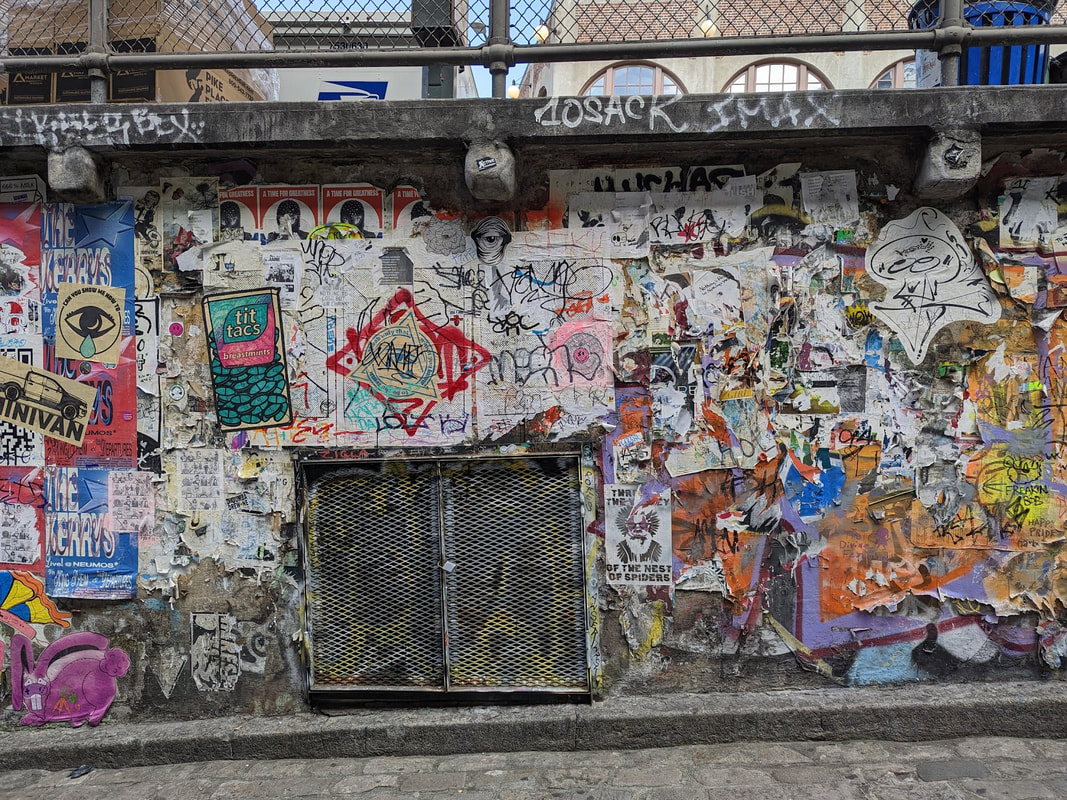 Tigger and Pike Place, Seattle 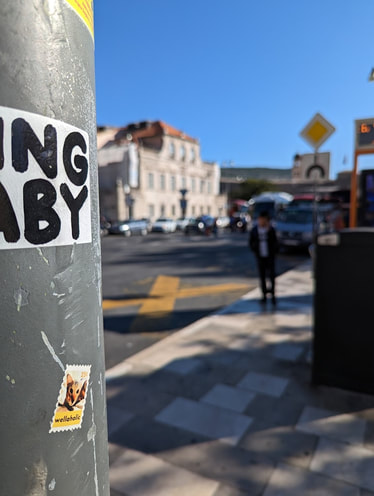 Tigger in Dubrovnik, Croatia Tigger in Dubrovnik, Croatia I miss Tigger. He was my best friend for more than ten years. He was always there for me, no matter what. He had a way of making me laugh with his antics and his expressions. He was a smart cat, too. He knew how to open doors, how to play fetch, how to cuddle when I needed it.
He died four months ago. It was sudden and cruel. I didn’t have time to say goodbye. I didn’t have time to do anything. I just watched him fade away, helpless and heartbroken. I still think of him every day. I still see him in my dreams. I still feel him in my arms. Sometimes I hear his meow or his purr, and I turn around, hoping to catch a glimpse of him. But he’s not there. He’s gone. But he’s not forgotten. He lives on in my memories, and in my project. A project that I started actually even before he passed away. A project that I call “Tigger’s World Tour”. You see, Tigger loved to travel. But he never had the opportunity to do so. There were so many places that he didn’t get to see. So many places that I wanted to show him. So many places that I wanted to share with him. So I decided to bring him with me, in a way. I made a stack of stickers that look like postage stamps, with his portrait. Whenever I go somewhere new, I stick one of these stickers somewhere visible, somewhere public, somewhere where other people can see it. It’s like leaving a mark of Tigger’s presence, a sign of his spirit, a tribute to his memory. It’s also like sending him a postcard, telling him where I am and what I’m doing, telling him that I miss him and that I love him. Tigger has been to many places since he died. He’s been to the Cape of Good Hope in South Africa. He's also been to Tulum in Mexico, and Santa Monica Pier in the USA. The Hagia Sophia in Turkiye. He’s even been up the Banff Gondola to the Sulphur Mountains. He’s also been to Pike Place Market in Seattle. That's the last spot he visited. Pike Place is a famous market where you can find all kinds of things: fish and flowers and fruits and vegetables and crafts and souvenirs and more. It’s also where you can find a wall covered with stickers and posters and graffiti and art. A wall that represents the diversity and creativity and history of Seattle. A wall that has one of Tigger’s stickers on it. Can you spot it? It’s not easy to find. It’s hidden among hundreds of other stickers, some old and faded, some new and bright. But it’s there. It’s there for anyone who cares to look. It’s there for anyone who wants to say hi to Tigger. It’s there for anyone who wants to join me in celebrating his life. Tigger was more than a cat. He was my companion. He was my partner. He was my world. 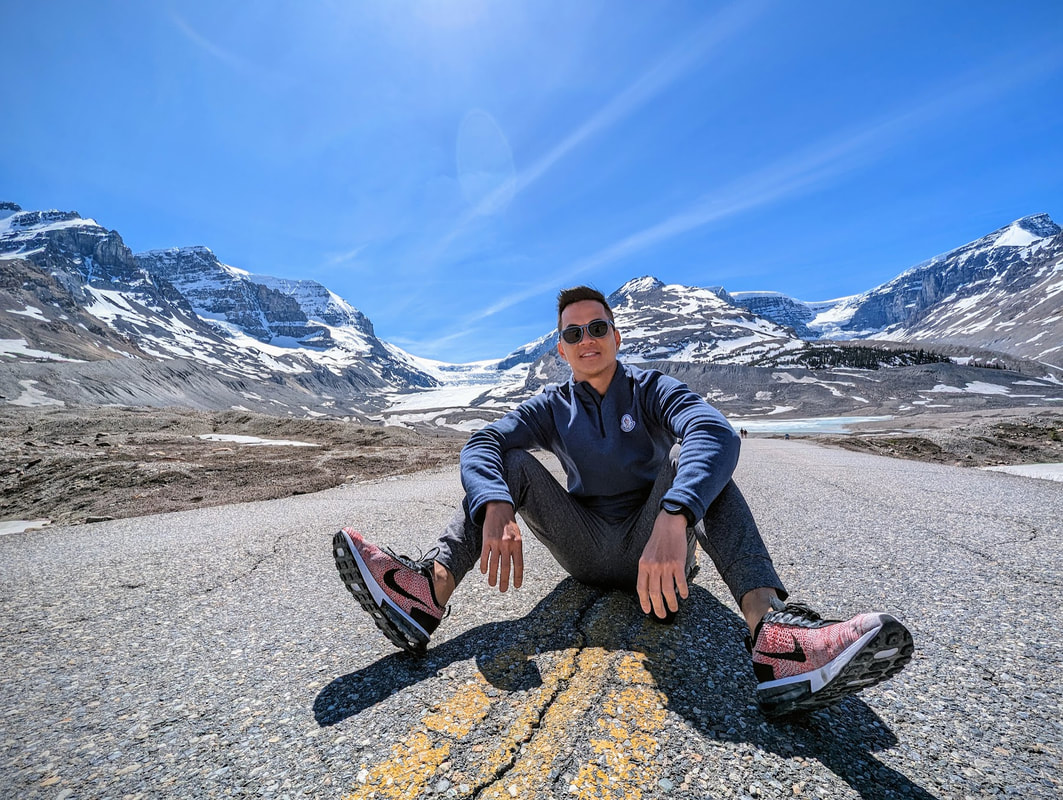 I am standing at the heart of the Canadian Rockies, at the apex of the Columbia Icefield in Jasper National Park. The air is thin here, crisp and cold, as it mingles with the faint scent of glacial ice. It's a magnificent view, the kind that makes you feel insignificant and infinite all at once. The stark white of the icefield contrasts against the blue of the sky, making the scene look almost surreal.
Yet, as I look around, the grandeur of the scene is marked by an undeniable sense of loss. I can see the rate of retreat etched in the landscape, a harsh reminder of the rapidly changing climate. The Columbia Icefield, a majestic relic of the last Ice Age, is melting. It's another record-breaking heatwave in the region, an unnerving reminder of the extent of global warming. I can feel the sun's intensity on my face, harsher than it should be at this altitude. I hear the occasional thunderous crack of ice breaking away, a disturbing symphony that accompanies the quiet whisper of the wind. I take a moment to sit on a rock and soak in the reality of the situation. I'm here, in this moment, witnessing the slow demise of a natural wonder. It's a strange feeling, knowing that this landscape, so vast and seemingly eternal, is fading. I feel a pang of guilt mixed with sadness. Climate change isn't just a concept or a statistic in a report. It's real and tangible. It's the receding line of the icefield The softening crunch under my shoes The increasing heat at this altitude. This journey has made it clear to me that climate change isn't a distant problem. It's here, now, changing the landscapes we've known and loved. The Columbia Icefield isn't just a tourist spot. It's a symbol, a glaring testament to the urgency of the climate crisis. The Columbia Icefield is a reminder of the fragility of our world. It's a wake-up call to all of us. The question is, will we answer it? 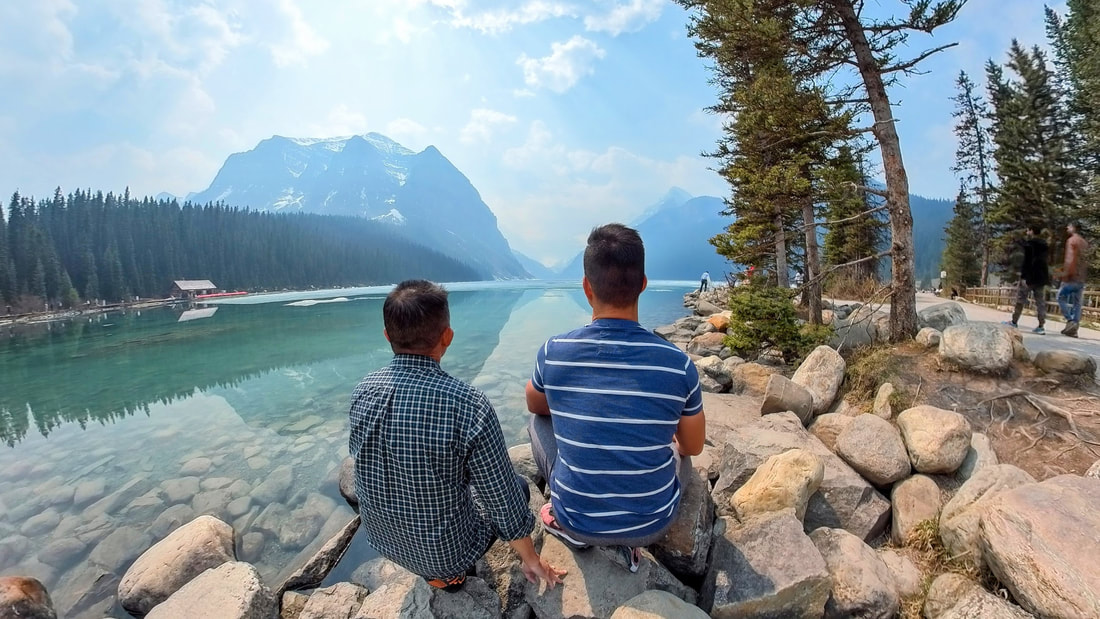 The beauty of the journey is often found not in the destination, but in the journey itself. As I drove through the vast, serene National Forests of Canada, I found myself enveloped in the grandeur of nature, and I found solace and enlightenment within its embrace.
Firstly, I am thankful for having the opportunity to traverse Jasper National Park, Banff National Park, and Yoho National Park. Each one is a jewel in the crown of Canada's natural wonders, each unique, each breathing life into the landscape in its own way. The forests, the mountains, the rivers – they all speak a language as old as time, and yet, it's a language we understand instinctively. The 11km hike up and down Johnston Falls was a challenge, and testing my endurance. Yet, every step brought a new perspective, a fresh vista that filled my heart with awe. The thunderous roar of the falls was both a testament to the power of nature and a soothing lullaby that washed over me, cleansing my spirit. The journey to the Ink Pots was equally mesmerizing. Each pot, with its unique color and bubbling water, was like a mirror reflecting the vast sky overhead. The sight brought to mind the words of Kahlil Gibran: "You work that you may keep pace with the earth and the soul of the earth." I felt an intimate connection with the world around me, and I was reminded once again of the importance of cherishing these moments of communion with nature. Driving through the forests and mountains of Canada, I found that the solitude of the journey gave me time to think. The open road, the infinite horizon, and the rhythm of the wheels on the asphalt became my companions. They offered a quiet comfort, a space for introspection, and a chance to look inward and reflect on my journey – not just through Canada, but through life itself. In these moments of solitude, I was reminded of the importance of gratitude. I am grateful for the privilege to witness such beauty, to breathe the clean air, to listen to the symphony of nature. I am grateful for the strength to hike, to explore, to drive. And I am grateful for the wisdom to appreciate these blessings. Driving through the National Forests of Canada, I learned that each journey we embark on is a reflection of our own life's journey. Each road we take, each mountain we climb, each river we cross, is a metaphor for our own struggles and triumphs, our own joys and sorrows. And in the end, it's not about the destination – it's about the journey, the experiences, the memories, and the lessons we learn along the way. As I write this, I am filled with a sense of tranquility and fulfillment. I look forward to my next journey, my next exploration, my next drive. And I carry with me the echoes of the forest, the roar of the falls, and the wisdom of the open road. Until then, remember: The journey is the destination. Embrace it, cherish it, learn from it. And most importantly, be grateful for it. |
AuthorI am MrWildy and I am trying to journal more about my life and also my travels. Find out more about me here. Categories
All
Archives
July 2022
|
 RSS Feed